

Abdominoplasty Surgery Antalya, Turkey
Abdominoplasty Surgery Turkey
Abdominoplasty Surgery in Antalya, Turkey is a body-contouring procedure designed for patients whose abdominal appearance is affected by loose skin, weakened abdominal wall support, rectus diastasis or a combination of these changes. Pregnancy, significant weight loss, aging and repeated weight fluctuations can alter the abdomen in ways that cannot always be corrected through exercise or further weight loss.
A successful Abdominoplasty Surgery is not simply about removing a piece of abdominal skin. The surgeon must evaluate the relationship between the skin, subcutaneous fat, abdominal fascia, rectus muscles, umbilicus, waist and surrounding torso. For some patients, excess skin is the main problem. For others, the abdomen projects forward because of rectus diastasis or intra-abdominal fat. Some patients have significant fat around the waist and flanks in addition to skin laxity.
For patients considering Abdominoplasty Antalya or Abdominoplasty Surgery Turkey, recognising these differences is important because there is no single surgical technique suitable for every abdomen. The most appropriate procedure may be full abdominoplasty, mini abdominoplasty, extended abdominoplasty, fleur-de-lis abdominoplasty or abdominoplasty combined with carefully planned liposuction.
At Medical Care Turkey, the treatment process is planned according to the patient's abdominal anatomy, medical condition, previous surgeries, weight history and expected outcome rather than using the same surgical approach for every international patient.
What Is Abdominoplasty Surgery?
Abdominoplasty is a surgical procedure in which excess abdominal skin is removed and the remaining tissues are repositioned to create a firmer and more proportionate abdominal contour.
Depending on the patient's anatomy, surgery may also involve correction of abdominal wall laxity and rectus diastasis.
The procedure can therefore address three different anatomical components:
- Excess or hanging abdominal skin
- Selected deposits of subcutaneous fat
- Abdominal wall and fascial laxity
These should be evaluated separately.
A patient may have considerable loose skin but very little excess fat. Another patient may have relatively good skin quality but significant abdominal wall separation following pregnancy. A third patient may have skin laxity together with excess fat around the abdomen and flanks.
Understanding which structures are responsible for the abdominal appearance is one of the most important steps in planning surgery.
What Problems Can Abdominoplasty Correct?
Abdominoplasty is primarily intended to correct structural changes of the abdominal wall and skin envelope.
It may be considered for patients with:
- Loose abdominal skin after pregnancy
- Excess lower abdominal skin
- Abdominal skin folding or overhang
- Skin redundancy after significant weight loss
- Rectus diastasis
- Reduced abdominal wall firmness
- Localised subcutaneous fat associated with skin laxity
- Distortion of the abdominal contour after previous weight fluctuations
- Selected scars from previous abdominal surgery
- Loss of definition between the abdomen and waist
The degree of correction depends on the patient's anatomy.
Abdominoplasty cannot change every feature of the abdomen, and understanding its limitations is as important as understanding its benefits.
Why Can the Abdomen Remain Prominent Even After Weight Loss?
One of the most important concepts in abdominoplasty planning is identifying what is causing abdominal projection.
A prominent abdomen can result from several different structures.
Excess Skin
Skin that has been significantly stretched by pregnancy or obesity may not completely retract after the volume underneath it decreases.
This can leave loose, folded or hanging tissue even when the patient reaches a stable weight.
Subcutaneous Fat
Subcutaneous fat is located between the skin and abdominal wall.
This is the type of fat that can potentially be reduced through weight loss or treated surgically with liposuction in selected patients.
Rectus Diastasis and Fascial Laxity
Pregnancy and major abdominal expansion can widen the connective tissue between the rectus muscles.
Even after weight loss, this can contribute to a rounded or projecting abdomen.
Visceral Fat
Visceral fat is located inside the abdominal cavity around the internal organs.
This is a critical distinction.
Abdominoplasty and liposuction do not remove visceral fat.
A patient may therefore have relatively little subcutaneous fat but still have a firm, prominent abdomen because much of the abdominal volume is intra-abdominal.
In such a patient, removing additional skin or subcutaneous fat cannot create the same flat contour that may be achievable in someone whose abdominal projection comes mainly from loose skin and rectus diastasis.
This is why direct physical examination is much more informative than simply evaluating body weight or requesting “as flat an abdomen as possible.”
Why Does Pregnancy Change the Abdomen?
Pregnancy can alter several layers of the abdominal anatomy simultaneously.
As the uterus expands, the abdominal skin stretches and the distance between the rectus muscles may increase. The connective tissues supporting the abdominal wall are also placed under prolonged tension.
After childbirth, the uterus decreases in size, but other tissues do not necessarily return completely to their previous condition.
Changes may include:
- Loose abdominal skin
- Rectus diastasis
- Stretch marks
- Reduced lower abdominal firmness
- Altered appearance of the umbilicus
- Localised fat accumulation
- Loss of waist definition
Exercise may strengthen the abdominal muscles but cannot directly remove redundant skin or surgically tighten a widened fascial layer.
For this reason, some women remain dissatisfied with their abdominal contour despite regular exercise and returning to their pre-pregnancy weight.
What Is Rectus Diastasis?
Rectus diastasis, or diastasis recti, describes widening of the linea alba between the right and left rectus abdominis muscles.
It is particularly common following pregnancy but may also occur following major weight changes or prolonged abdominal expansion.
Patients may notice a central abdominal prominence that remains even when they are relatively slim.
Other findings can include:
- Midline bulging
- A ridge during abdominal contraction
- Reduced abdominal wall firmness
- A persistent rounded abdominal appearance
Rectus diastasis should not automatically be confused with a hernia.
A hernia involves a defect through which abdominal contents may protrude. Rectus diastasis is primarily a widening and weakening of the midline connective tissues.
How Is Rectus Diastasis Corrected During Abdominoplasty?
The phrase “muscle repair” is commonly used when discussing abdominoplasty, but it is not always anatomically precise.
During most aesthetic rectus diastasis corrections, the rectus muscles themselves are not cut apart and reconstructed.
Instead, the fascial layer or rectus sheath is tightened using sutures. This technique is known as fascial plication or rectus sheath plication.
The objective is to reinforce the widened abdominal wall and bring the central fascial structures closer to the midline.
Not every patient requires the same amount of plication, and some patients undergoing abdominoplasty do not require it at all.
Studies evaluating abdominoplasty with rectus diastasis repair suggest that selected patients may experience functional as well as contour-related improvements, although functional outcomes vary between studies.
Does Every Abdominoplasty Include Abdominal Wall Repair?
No.
Automatically performing the same abdominal wall plication in every patient would ignore important anatomical differences.
For example:
A patient following major weight loss may have extensive excess skin but relatively good midline support.
A postpartum patient may have moderate skin laxity but substantial rectus diastasis.
Another patient may have both problems.
The correct surgical plan should therefore distinguish between:
skin excess, subcutaneous fat, fascial laxity and intra-abdominal volume.
Only the components that require correction should be treated.
Who Is a Good Candidate for Abdominoplasty Surgery?
Appropriate candidates are generally adults who are medically suitable for elective surgery, have realistic expectations and have an abdominal contour problem that cannot be adequately corrected through weight management and exercise alone.
Abdominoplasty may be considered when there is significant:
- Abdominal skin laxity
- Lower abdominal skin excess
- Post-pregnancy abdominal changes
- Rectus diastasis
- Skin redundancy after major weight loss
- Abdominal wall laxity
- Combined skin and subcutaneous fat excess
Patients should ideally be at a relatively stable and maintainable weight before surgery.
Professional plastic surgery guidance also emphasises medical fitness, weight stability, realistic expectations and smoking status when evaluating candidates for abdominoplasty.
Is There an Ideal Weight for Abdominoplasty?
There is no single body weight that automatically determines whether a patient can or cannot undergo abdominoplasty.
The important question is whether the patient's current weight is:
- Medically appropriate for elective surgery
- Relatively stable
- Close to the weight they realistically intend to maintain
BMI may form part of the surgical risk assessment, but body composition and fat distribution also matter.
Two patients with a similar BMI may have very different abdominal anatomy.
One may have considerable loose skin following weight loss, while another may have significant visceral fat and little redundant skin.
The expected benefit from abdominoplasty can therefore be very different.
Is Abdominoplasty a Weight-Loss Procedure?
No.
Abdominoplasty is a body-contouring operation, not a treatment for obesity.
Skin and a certain amount of subcutaneous tissue are removed during the procedure, so the patient's body weight may decrease to some extent.
However, kilograms lost are not an appropriate way to measure the success of the operation.
The primary goals are related to:
- Removal of redundant skin
- Improvement of abdominal contour
- Correction of abdominal wall laxity when required
- Better proportional relationship between abdomen and torso
Patients who intend to lose a substantial amount of additional weight are generally better served by reaching a more stable weight before definitive body-contouring surgery.
When Should Abdominoplasty Be Postponed?
There are situations in which delaying surgery may produce a safer or more durable result.
Examples include patients who:
- Are planning substantial additional weight loss
- Are currently pregnant
- Expect pregnancy in the near future
- Have an uncontrolled medical condition
- Have not completed an appropriate anaesthetic assessment
- Continue to use nicotine despite surgical recommendations
- Have nutritional deficiencies requiring correction
- Have unresolved factors that substantially increase operative risk
Timing is particularly important after major weight loss and pregnancy because additional changes in body volume can alter the surgical result.
Types of Abdominoplasty Surgery
Abdominal deformities are not identical, so abdominoplasty should not be viewed as one standard operation.
The direction and extent of skin excess determine which technique may be appropriate.
Full Abdominoplasty
Full abdominoplasty is generally considered when significant laxity exists both below and above the umbilicus.
The procedure may include:
- Removal of lower abdominal skin
- Mobilisation and repositioning of the abdominal skin
- Umbilical transposition
- Rectus sheath plication when necessary
- Selective liposuction when appropriate
Full abdominoplasty provides access to a larger abdominal area than mini abdominoplasty and is commonly considered after pregnancy or significant weight changes.
Mini Abdominoplasty
Mini abdominoplasty is designed for more limited lower abdominal deformities.
It may be considered when:
- Excess skin is predominantly below the umbilicus
- Upper abdominal skin remains relatively firm
- Tissue redundancy is limited
- Extensive skin mobilisation is unnecessary
The term “mini” does not mean that it is automatically the preferred or more modern operation.
If the patient's laxity extends substantially above the umbilicus, a limited procedure may fail to correct the actual problem.
Extended Abdominoplasty
Extended abdominoplasty continues the skin excision further towards the sides of the torso.
This may be necessary when skin redundancy extends from the abdomen towards the flanks, particularly following substantial weight loss.
The potential advantage is broader contour correction.
The trade-off is a longer scar.
Fleur-de-Lis Abdominoplasty
Fleur-de-lis abdominoplasty removes excess tissue in both horizontal and vertical directions.
It is mainly considered in patients with extensive multidirectional skin excess, particularly after massive weight loss.
Because this technique produces both a horizontal and vertical abdominal scar, it is generally used when the additional tissue correction provides sufficient benefit to justify the extra scar.
Mini Abdominoplasty vs. Full Abdominoplasty
Choosing between mini and full abdominoplasty should not begin with the question:
“Which one gives me the shorter scar?”
The better question is:
“Where is my skin laxity located?”
Mini abdominoplasty has a limited treatment area.
If excess skin, tissue laxity or abdominal wall changes extend significantly above the umbilicus, full abdominoplasty may be required to address the complete deformity.
Conversely, performing extensive abdominal surgery in a patient with only a small lower abdominal skin fold may be unnecessary.
The surgical extent should match the anatomical extent of the problem.
How Is Abdominoplasty Surgery Performed?
Although the precise technique differs between patients, full abdominoplasty generally follows several fundamental stages.
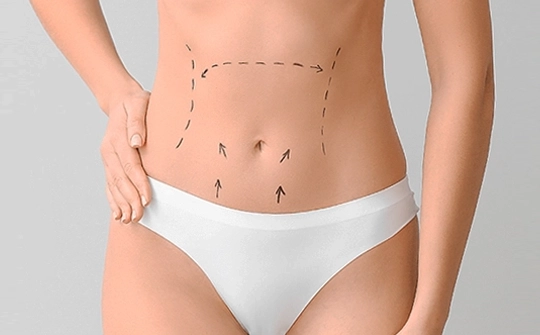
Preoperative Examination and Marking
Abdominal assessment should include examination while standing.
The surgeon evaluates:
- Abdominal skin excess
- Lower abdominal fold
- Waist contour
- Umbilical position
- Existing scars
- Abdominal asymmetry
- Distribution of subcutaneous fat
- Areas potentially suitable for liposuction
Standing assessment is important because loose abdominal tissues change position when the patient lies down.
Anaesthesia
Full abdominoplasty is generally performed under general anaesthesia.
Preoperative anaesthetic assessment is therefore an important part of planning.
Lower Abdominal Incision
A horizontal incision is made in the lower abdomen.
The length depends mainly on the amount and distribution of skin that needs to be removed.
More extensive skin redundancy normally requires a longer incision.
Trying to force a large amount of tissue correction through an unrealistically short incision can compromise contour quality.
Abdominal Wall Assessment
After appropriate exposure, the abdominal fascia can be evaluated.
If significant rectus diastasis is present, fascial plication may be performed.
Removal of Excess Skin
The abdominal skin envelope is repositioned downward and the amount of redundant tissue is determined.
Excess skin is then removed.
This is one of the fundamental differences between abdominoplasty and isolated fat-reduction procedures.
Umbilical Transposition
During conventional full abdominoplasty, the original umbilicus usually remains attached to its deeper stalk.
Because the surrounding skin is moved, a new opening is created in the repositioned abdominal skin and the patient's existing umbilicus is brought through this opening.
Surgical Closure
The abdominal incision is closed in layers.
Depending on the technique, the surgeon may use drains, progressive-tension sutures or other methods intended to manage the space beneath the abdominal tissues and reduce fluid accumulation.
What Happens to the Belly Button During Abdominoplasty?
The belly button is one of the most visible details of abdominal contour surgery.
Its appearance can strongly influence whether the abdomen looks natural after healing.
Important characteristics include:
- Vertical position
- Shape
- Depth
- Size
- Orientation
- Relationship with the abdominal midline
- Visibility of the surrounding scar
During a standard full abdominoplasty, the original umbilicus is generally preserved on its stalk rather than removed and replaced with an entirely new structure.
The surgeon creates a new opening in the repositioned skin through which the original umbilicus emerges.
For this reason, umbilical design is not a minor part of abdominoplasty. It contributes substantially to the aesthetic quality of the final abdominal contour.
Where Is the Abdominoplasty Scar?
Abdominoplasty requires a permanent surgical scar.
In full abdominoplasty, the principal scar runs horizontally across the lower abdomen.
Whenever anatomy permits, it is positioned low enough to be covered by underwear or swimwear.
However, the length of the scar is directly related to the amount and distribution of excess skin.
Patients with substantial lateral skin excess generally require a longer scar than patients with a more limited deformity.
No responsible surgical plan can guarantee an “invisible” scar.
Scar appearance is influenced by:
- Genetics
- Skin type
- Wound tension
- Individual healing
- Infection
- Nicotine exposure
- Previous scars
- Postoperative care
Scars usually change significantly during the months following surgery and continue to mature over a prolonged period.
Can Abdominoplasty Remove Stretch Marks?
Abdominoplasty can remove some abdominal stretch marks, but not all of them.
The deciding factor is location.
Stretch marks positioned within the abdominal skin that is surgically removed disappear together with that tissue.
Stretch marks located on skin that must remain will also remain.
They may change position as the abdominal skin is repositioned, but surgery should not be presented as a procedure designed to eliminate every stretch mark.
Abdominoplasty vs. Liposuction: What Is the Difference?
Only after the abdominal anatomy has been evaluated does the comparison with liposuction become meaningful.
The two procedures treat different structures.
Abdominoplasty primarily addresses excess skin and abdominal wall laxity.
Liposuction primarily reduces selected deposits of subcutaneous fat.
Liposuction does not:
- Remove substantial hanging skin
- Correct significant rectus diastasis
- Tighten the abdominal fascia
- Remove visceral fat
Abdominoplasty, on the other hand, is not designed to remove every localised fat deposit around the waist and torso.
This is why some patients benefit from one procedure, while others may benefit from a carefully planned combination.
When Is Liposuction Combined With Abdominoplasty?
When abdominoplasty and liposuction are used together as part of a coordinated surgical plan, the procedure is often described as lipoabdominoplasty.
However, the objective should not be to perform the maximum possible amount of liposuction simply because the patient is already undergoing abdominal surgery.
The purpose is to improve body proportions where appropriate.
For example, removing loose central abdominal skin may create a flatter anterior abdomen, but persistent fat around the flanks may still obscure the waistline.
Strategically planned liposuction can sometimes improve the transition between:
- Abdomen
- Waist
- Flanks
- Lateral torso
Patient selection and surgical technique remain important because blood supply to the abdominal tissues must be preserved.
A systematic review and meta-analysis involving 14,061 patients found no evidence that appropriately performed lipoabdominoplasty had a higher overall complication rate than conventional abdominoplasty.
Abdominoplasty After Pregnancy
Post-pregnancy abdominoplasty should not be reduced to simply removing loose skin.
Pregnancy can create several different anatomical changes:
- Rectus diastasis
- Loose lower abdominal skin
- Changes around the umbilicus
- Stretch marks
- Fat redistribution
- Loss of waist definition
- Fascial laxity
These changes vary substantially between women.
For example, a slim woman can have significant rectus diastasis despite having very little abdominal fat.
Another woman may have minimal diastasis but extensive redundant skin.
A third may have all of these changes together.
The operation should therefore be planned according to the patient's actual post-pregnancy anatomy rather than using a standardised surgical template.
Can You Become Pregnant After Abdominoplasty?
Yes.
Abdominoplasty does not normally prevent future pregnancy.
However, pregnancy can stretch the abdominal skin and fascia again and may partially reverse the changes created by surgery.
For this reason, women planning pregnancy in the near future often choose to postpone elective abdominoplasty.
If pregnancy occurs after surgery, appropriate obstetric follow-up remains necessary as with any pregnancy.
Abdominoplasty After Major Weight Loss
Major weight loss creates a different pattern of abdominal deformity from pregnancy.
After losing a substantial amount of weight, loose skin may extend beyond the front of the abdomen and continue around the:
- Flanks
- Hips
- Lower back
The excess tissue may also occur in both horizontal and vertical directions.
A standard full abdominoplasty is not necessarily sufficient for every post-weight-loss patient.
Depending on the distribution of tissue, extended abdominoplasty, fleur-de-lis abdominoplasty or a broader body-contouring operation may be more appropriate.
Nutritional status is also particularly relevant in patients who have undergone bariatric surgery because protein, iron, vitamin or other deficiencies can affect surgical planning and wound healing.
Preparing for Abdominoplasty Surgery in Antalya, Turkey
Patients travelling for Abdominoplasty Surgery in Antalya, Turkey should undergo appropriate medical evaluation before surgery.
The assessment may include:
- Detailed medical history
- Previous abdominal operations
- Previous C-section scars
- Pregnancy history
- Weight-loss history
- Bariatric surgery history
- Current medications
- Supplements
- Smoking and nicotine use
- Previous blood clots
- Relevant family history
- Anaesthetic history
Preoperative testing is determined according to the patient's age, medical condition and planned operation.
Professional plastic surgery guidance includes medical evaluation, medication review and smoking cessation among the standard considerations before abdominoplasty.
Why Is Smoking and Nicotine Important Before Abdominoplasty?
Nicotine can impair blood flow to healing tissues.
This is particularly relevant in abdominoplasty because a relatively large area of abdominal skin is repositioned during surgery.
Poor tissue perfusion can increase the risk of:
- Delayed wound healing
- Wound separation
- Skin necrosis
- Infection
- Poor scar quality
Patients should disclose all nicotine exposure, including cigarettes, electronic cigarettes and nicotine-containing products.
The exact cessation protocol should be determined by the treating surgical team.
How Long Does Abdominoplasty Surgery Take?
There is no meaningful universal operation time.
Duration depends on factors such as:
- Full or mini abdominoplasty
- Amount of tissue excess
- Rectus diastasis repair
- Additional liposuction
- Previous abdominal surgery
- Post-bariatric anatomy
- Existing scars
- Additional simultaneous procedures
An extensive post-weight-loss operation naturally requires a different amount of surgical work from a limited lower abdominal correction.
Operation time should therefore not be used as a measure of surgical quality.
How Long Is the Hospital Stay After Abdominoplasty?
Hospital stay depends on the extent of surgery, the patient's general health, associated procedures and early recovery.
Some patients may require overnight observation, while more extensive operations may require additional inpatient monitoring.
For international patients, one distinction is especially important:
being discharged from hospital does not automatically mean being ready for international air travel.
These are different clinical decisions.
Abdominoplasty Surgery Turkey for International Patients
International patients require additional planning because postoperative care continues after the operation itself.
Before travelling to Antalya, Turkey, preliminary information may include:
- Medical history
- Height and weight
- Previous operations
- Medication list
- Pregnancy and childbirth history
- Weight changes
- Smoking status
- Abdominal photographs
- Expected outcome
Remote assessment can help organise the treatment process, but it cannot completely replace direct physical examination.
The final decision regarding the type of abdominoplasty, degree of abdominal wall correction and need for additional liposuction should be confirmed after an in-person examination.
How Long Should I Stay in Antalya After Abdominoplasty Surgery?
International patients should plan enough time for early postoperative monitoring rather than choosing their return flight solely according to the shortest available package.
Before leaving Turkey, the medical team may need to evaluate:
- Incision healing
- Abdominal skin circulation
- Swelling
- Mobility
- Drain output where applicable
- Seroma
- Infection
- Pain control
- General recovery
The appropriate duration of stay depends on the individual patient and procedure.
Flying After Abdominoplasty Surgery
International air travel after major surgery deserves specific planning.
Prolonged immobility is one of several factors considered when assessing the risk of venous thromboembolism.
Return-flight timing may therefore depend on:
- Surgical extent
- Individual clotting risk
- Mobility
- Associated procedures
- Recovery progress
- Flight duration
Patients should discuss their intended travel schedule with the surgical team rather than assuming that hospital discharge automatically means they are medically ready for a long flight.
Abdominoplasty Recovery
Recovery occurs gradually.
The abdomen seen immediately after surgery is not the final result because postoperative swelling and tissue tension temporarily alter the contour.
Early Recovery
During the first postoperative period, patients may experience:
- Tightness
- Swelling
- Bruising
- Abdominal discomfort
- Temporary numbness
- Difficulty standing completely upright
Early walking is generally encouraged according to the surgeon's protocol.
Following Weeks
Mobility gradually improves and swelling begins to decrease.
Patients should continue avoiding activities that place excessive tension on the abdominal wall or surgical incision.
Following Months
Residual swelling continues to improve, tissues gradually soften and the abdominal contour becomes more defined.
Scar maturation also continues for many months.
Patients should therefore avoid judging the final result during the first few weeks.
When Can I Return to Work?
Return to work depends primarily on the physical demands of the patient's occupation and the extent of surgery.
Computer-based work is very different from:
- Manual labour
- Heavy lifting
- Prolonged standing
- Frequent travel
- Physically demanding healthcare work
Patients should therefore receive an individual return-to-work recommendation rather than relying on one fixed recovery date.
When Can I Exercise After Abdominoplasty?
Walking generally resumes early as part of postoperative mobilisation.
More demanding physical activity requires a gradual return.
Exercise involving significant abdominal wall loading — particularly when rectus sheath plication has been performed — should not be restarted until tissue healing is adequate.
Examples include:
- Heavy resistance training
- Intense abdominal exercises
- Running
- High-impact training
- Heavy lifting
The patient's surgeon should determine when each activity can safely resume.
What Are the Risks of Abdominoplasty Surgery?
Abdominoplasty is a major surgical procedure and should not be presented as risk-free.
Possible complications include:
- Seroma
- Hematoma
- Infection
- Wound separation
- Delayed wound healing
- Skin or fat necrosis
- Unfavourable scarring
- Changes in abdominal skin sensation
- Persistent swelling
- Asymmetry
- Contour irregularity
- Persistent discomfort
- Deep vein thrombosis
- Pulmonary embolism
- Anaesthetic complications
- Need for revision surgery
Appropriate patient selection, surgical planning and postoperative follow-up can reduce some risks but cannot reduce them to zero.
What Is a Seroma After Abdominoplasty?
A seroma is an accumulation of fluid beneath the operated abdominal tissues.
It is one of the most recognised local complications of abdominoplasty.
Depending on its size and persistence, a seroma may simply require observation or may need aspiration or other treatment.
Modern abdominoplasty techniques may include strategies intended to reduce the potential space in which fluid can accumulate.
A 2026 network meta-analysis evaluating 22 studies found evidence supporting approaches such as Scarpa fascia preservation and progressive-tension sutures as potentially useful seroma-prevention strategies, while also noting the need for further standardised research.
Why Is Blood Clot Prevention Important?
Venous thromboembolism is an important consideration in major body-contouring surgery.
Risk assessment can include factors such as:
- Previous thrombosis
- Family history
- Age
- BMI
- Smoking
- Hormonal medication
- Length of surgery
- Additional simultaneous procedures
- Reduced mobility
- Long-distance travel
Preventive strategies are determined according to the individual risk profile and may include early mobilisation, mechanical compression and medication in selected patients.
Are Abdominoplasty Results Permanent?
The tissue removed during surgery does not regenerate in the same form.
However, the body continues to change with time.
Future abdominal contour can be affected by:
- Pregnancy
- Significant weight gain
- Major weight loss
- Aging
- Changes in skin elasticity
Patients who maintain a relatively stable weight generally have a better chance of preserving their result.
For this reason, abdominoplasty results are better described as long-lasting rather than permanently unaffected by future body changes.
Revision Abdominoplasty
Revision surgery may be considered when a patient who has previously undergone abdominoplasty develops a problem that requires further correction.
Possible reasons include:
- Residual skin excess
- Recurrent skin laxity
- Scar widening
- Unsatisfactory scar position
- Abdominal asymmetry
- Contour irregularities
- Umbilical concerns
- Persistent or recurrent rectus diastasis
- Changes following pregnancy
- Significant subsequent weight change
Revision procedures are usually more complex because previous surgery changes the tissue planes, scarring and blood supply.
For patients considering surgery abroad, this highlights the importance of understanding how postoperative concerns and long-term communication will be managed.
Abdominoplasty Surgery Turkey: Why Consider Antalya?
Patients researching Abdominoplasty Surgery Turkey frequently encounter treatment options in several Turkish cities.
For a major surgical procedure, the decision should involve more than comparing prices.
Important considerations include:
- Plastic surgery expertise
- Hospital infrastructure
- Anaesthesia services
- Preoperative assessment
- Postoperative monitoring
- Access to medical care if a complication occurs
- International patient coordination
- Follow-up before returning home
As one of Turkey’s leading medical tourism destinations, Antalya offers access to modern hospital infrastructure, experienced medical specialists and well-developed international patient services, making it a practical option for patients undergoing major body-contouring procedures such as abdominoplasty.
Abdominoplasty Cost in Antalya, Turkey
The cost of Abdominoplasty Surgery in Antalya varies because “abdominoplasty” does not describe exactly the same operation for every patient.
Price may be influenced by:
- Mini or full abdominoplasty
- Extended abdominoplasty
- Fleur-de-lis abdominoplasty
- Need for rectus diastasis correction
- Additional liposuction
- Previous abdominal surgery
- Post-bariatric anatomy
- Hospital
- Anaesthesia
- Length of hospital stay
- Postoperative garments
- Medication
- Accommodation
- Transfers
- Follow-up arrangements
A patient requiring a limited lower abdominal correction should not automatically receive the same treatment plan or quotation as someone requiring extensive post-weight-loss body contouring.
For international patients, it is therefore more useful to compare what is actually included in the treatment plan rather than comparing a single advertised price.
Why Choose Medical Care Turkey for Abdominoplasty Surgery in Antalya?
For international patients, successful treatment involves more than arranging an operation date.
Medical Care Turkey coordinates the treatment journey before arrival in Turkey, during the hospital process and through the early postoperative period.
The pathway may include:
- Preliminary medical assessment
- Plastic surgery consultation coordination
- Preoperative planning
- Hospital arrangements
- Airport and local transfers
- Accommodation coordination where required
- Postoperative appointments
- Communication during the recovery period
The objective is to establish a clear treatment plan before travelling while recognising that the definitive surgical technique can only be confirmed after direct examination.
Questions to Ask Before Abdominoplasty Surgery in Turkey
Before deciding on Abdominoplasty Surgery in Turkey, international patients should understand exactly what operation has been recommended and why.
Useful questions include whether significant rectus diastasis is present, whether fascial plication will be required, what type of abdominoplasty is recommended, whether liposuction is necessary, where the scar will be positioned, how the umbilicus will be managed, how long postoperative monitoring is required, when international travel can resume and how complications will be handled after returning home.
A meaningful consultation should explain the reasoning behind the surgical plan rather than simply providing the name and price of a procedure.
Frequently Asked Questions About Abdominoplasty Surgery
Is Abdominoplasty suitable after pregnancy?
Yes, abdominoplasty may be considered when loose skin, rectus diastasis or abdominal wall laxity remains after pregnancy and the body has recovered. Women planning another pregnancy in the near future may prefer to postpone surgery because future pregnancy can alter the result.
Does Abdominoplasty repair abdominal muscles?
When rectus diastasis is present, the surgeon generally tightens the rectus sheath or abdominal fascia using plication sutures. The muscles themselves are not usually cut apart and reconstructed.
Can Abdominoplasty remove visceral fat?
No. Visceral fat is located inside the abdominal cavity around the organs. Abdominoplasty and liposuction treat tissues outside the abdominal cavity and cannot remove visceral fat.
Can Abdominoplasty remove abdominal fat?
Some subcutaneous fat is removed together with excised skin, and additional fat may be treated with liposuction when appropriate. However, abdominoplasty is not a weight-loss operation.
Can Abdominoplasty create a completely flat abdomen?
Not in every patient. Final contour depends on skin, subcutaneous fat, abdominal wall anatomy, visceral fat, rib cage and pelvic structure. A patient with significant visceral fat may still have abdominal projection even after technically successful surgery.
What is the difference between Mini Abdominoplasty and Full Abdominoplasty?
Mini abdominoplasty mainly treats limited lower abdominal laxity, whereas full abdominoplasty addresses a larger area and usually involves repositioning of abdominal skin around the umbilicus. The correct procedure depends on where the tissue excess is located.
When is liposuction added to Abdominoplasty?
Liposuction may be added when selected subcutaneous fat deposits around the abdomen, waist or flanks need treatment in addition to excess skin. The combination is commonly called lipoabdominoplasty.
Will Abdominoplasty remove all stretch marks?
No. Stretch marks located on skin that is surgically removed disappear with that tissue. Stretch marks on preserved abdominal skin remain.
Is the Abdominoplasty scar permanent?
Yes. The scar is permanent, although it generally changes and becomes less noticeable as it matures. Its final appearance varies between individuals.
Can Abdominoplasty be performed after bariatric surgery?
Yes, selected patients can undergo abdominal contouring after bariatric surgery and major weight loss. Weight stability, nutritional status, extent of skin excess and overall surgical risk need to be evaluated carefully.
How long does swelling continue after Abdominoplasty?
Most swelling gradually decreases during the initial weeks, but residual swelling and tissue changes can continue for several months. The final contour should not be evaluated immediately after surgery.
Can I have another pregnancy after Abdominoplasty?
Yes. The operation does not usually interfere with the ability to become pregnant, but pregnancy may stretch the abdominal tissues again and change the aesthetic result.
Abdominoplasty Turkey: The Surgical Plan Should Match the Anatomy
The most important question before Abdominoplasty Surgery is not simply how much skin or fat can be removed.
It is:
Which anatomical structures are actually responsible for the abdominal contour?
For one patient, the primary problem may be redundant lower abdominal skin.
For another, it may be rectus diastasis.
For another, abdominal projection may be strongly influenced by visceral fat and therefore cannot be corrected by removing additional subcutaneous tissue.
Patients following major weight loss may require correction extending beyond the front of the abdomen, while selected patients with flank fat may benefit from liposuction combined with abdominoplasty.
For patients considering Abdominoplasty Antalya or Abdominoplasty Surgery Turkey, identifying these anatomical differences before surgery allows the procedure to be planned as an individualised body-contouring operation rather than a standard surgical package.
 Before You Travel



Hello, exactly 20 days ago I had a nose surgery by my doctor Zühtü. (I had previously broken my nose in an accident and had an operation, but since there was no cartilage{...}
13.08.2024Assoc. Prof Dr. Zühtü DemirI can't thank my doctor Zühtü and his team enough. The only place I would trust with my eyes closed. Their care and understanding before and after my surgery was indescri{...}
12.08.2024Assoc. Prof Dr. Zühtü DemirI went to Dr. Zühtü 1.5 months ago to have a nose surgery. I had breathing problems and I didn't like the look of my nose. Dr. Zühtü said that it should be natural and th{...}
11.08.2024Assoc. Prof Dr. Zühtü Demir